Sunday, July 16, 2017

What do you ask yourself?


A wonderful book was gifted to me by my mentor. It’s called “Great Leaders Ask Great Questions” by John Maxwell, a christian man and an incredible author and leader. The book highlighted how much more powerful questions were than directions. The questions engage their minds and get them thinking critically. Asked consistently, you can build some really good leaders.

In terms of valuable information, I would rank this book as one of the top three books I’ve read- it’s that good.

One exercise the book recommended was to create a list of questions to ask yourself each day. The better the question, the more value you will get out of asking it. Allow me to share with you the questions I thought for myself-:

How can I add more value to my life and others’?
I’m sold on the fact that genuine wealth is created by creating value for others. I’m also convinced that creating strong relationships follow similar logic. It can be easy to ask yourself, how can I get what I want

Do the people around me respect me?
Can I be counted on by those closest to me? Would they turn to me for help and feel that I would be there for them? Do they believe I care?

Am I doing the most with the gifts God has given me?
This is a favorite question of my mentor. We are all given limited time, are we spending it growing and giving to others? Are we focused on the strengths we have? Are we being effective or simply active?

Who should I be surrounding myself with?
The quality of the people you spend time with is well known to dictate how effective you can be. Are you surrounding yourself with the type of people who push you and add value to your thinking?


Those are the questions I've started for myself. What do you think? What would you add?

Sunday, January 3, 2016

Book List

This list is part self-edification, part remembering, and part guiding. Hopefully it serves to prove I'm committed to growing, builds an archive to support my memory, and helps others find the resources for their own growth. There are obviously a ton of lessons to be learned from all these books, but to keep it simple for myself, I've limited my notations to thing I found most useful.

The First Time Manager -Loren Belker, Jim McCormick, Gary Topchick
In Progress...

The Great Game of Business - Jack Stack
Teach your employees to run a business so they can make better decisions.

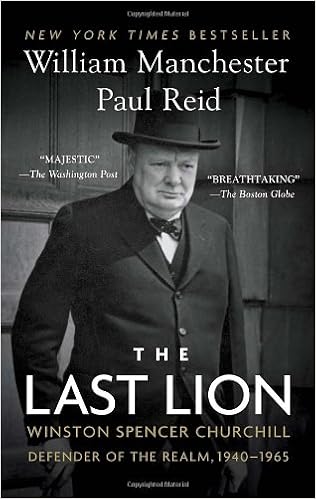
The Last Lion- Winston Churchill - William Manchester
A man, regardless of all other deficiencies, with strong convictions and the ability to communicate them can move a nation (This was true of both Churchill and Hitler).

Managing Yourself - Peter Drucker
Learn about yourself so you can manage your time better.

Lincoln the Unknown, Dale Carnegie
Sometimes your legacy isn't realized until your success. Hold firm in your convictions.

Amazon, The Everything Store - Brad Stone
Leave a chair for the customer in your meetings. They determine your success.

First, Break All The Rules - Marcus Buckingham
Don't try to fix people's weaknesses, help them discover and cultivate their strengths.

The Google Story
There will be many capable people who help you along the way, but in the end, you must weigh their advice to make the best decision for your company.

Business at the Speed of Light - Bill Gates
Information is your company's nervous system, the more information you can make available, the better the business can react.

Common Sense Matters - Eric Levine
Hire for talent. Teach for skill.

Next Generation Leader - Andy Stanley
Don't be afraid to delegate in order to focus your time on your strengths.

The Canoe Theory
You get the best results by putting people in places where they can succeed and weeding out the people who don't share your vision.

Purple Cow
Exceptional customer service will always make you stand out.

To Sell is Human
Everyone tries to persuade others in some way. The art of sales is not devoted simply to products.

Richest Man in Babylon- George Clason
Create a wealth account. Consider it a direct measure of your financial success and make sure its value increases every year.

Delivering Happiness- Tony Hsieh
Spend your money on valuable experiences. They're more valuable than stuff.

Four Disciplines of Execution- Sean Covey
Set aside time to get your head out of the day-to-day work (the whirlwind) and tackle major challenges that will move you forward.

Eat That Frog!
Do the worst thing on your to-do list first, everything else will seem easy.

Lean Startup Principles- Eric Reis
Find a way to get your idea to the public quickly and cheaply so you can get valuable feedback easier.

One Size Fits One
Don't presume that your customers are all alike, 

Rich Dad, Poor Dad- Robert Kiosaki
Wealth is learned and without intention, life won't teach it to you.

The Art of War- Tsung Tsu
Random thoughts on leading and eating opponents

How to Win Friends and Influence People, Dale Carnegie
Make others feel good about themselves and you'll have a much better time working with them.

7 Habits of Highly Successful People- Steven Covey

The Eighth Habit- Steven Covey

Saturday, January 2, 2016

The Last Lion: A lesson in Failure

Since I've been doing so much reading on success and technology, I wanted to mix things up with some biographies. Obviously just any biography wouldn't be worthwhile, it had to be something historical to leave modern technology behind.

The Last Lion, by William Manchester and Paul Reid starts with the story of Sir Winston Churchill, supplanting the existing Prime Minister, Neville Chamberlin.
The details of the war were certainly interesting, but I'll let WWII buffs who are better with dates and names retell those stories. For me the character of the people in that saga were what interested me the most. Here's a quick overview:

Stalin

The communist leader of Russia who initially started the war in Axis with Germany, but once betrayed, formed a weak alliance with the Allies. Throughout the whole war, Stalin seemed laser focused on securing Russia's borders, recapturing lost territories from WWI. His focus was so great that he gave little thought to the deaths of millions of his people or the politics with the U.S. To him, he was fighting the war alone and he would take whatever he wanted at the end of the war. He did, and he would. Your resolve determines your tolerance for costs.

Roosevelt

Franklin Roosevelt was the U.S. President for almost all of the war (except when the U.S. bombed Japan). He had the unenviable task of pulling the U.S. people out of apathy and into action. Having already suffered a world war and a great depression, Americans were not interested in anything happening in Europe and held little reverence for it's history. Roosevelt was over confident in his charisma, believing he could build a strong relationship with Stalin. He also underestimated Stalin's resolve which led to the fall of the iron curtain. When two similarly able men collide, the one with the stronger resolve will win.

Churchill

Just barely in office, Churchill finds himself at the start of the WWII (which would not be named such until later in the war). Bombs fly across Europe and Nazi's begin the attack of neighboring countries. What I loved about Churchill were his faults. Heavy drinker, heavy smoker, lover of war & short tempered. Having served in WWI, his ideas about modern warfare failed to match reality almost throughout the war. As a strategist, he failed to calculate it's impact in many critical battles.

Churchill's most inspiring trait was his spirit. He spoke in a strange old english (which later became regarded favorably) and he had many opportunities to end the war without many English casualties because Hitler was fond of England and offered favorable terms of surrender.

It was Churchill's passion and ability to convey it that not only convinced a war-weary England to pick up arms again, but did so with enthusiasm that lasted much of the war. Against all odds, he managed to convince that island to fight to the last breath. Even when he failed battle after battle and allies toppled to the Nazi army, he still kept their spirits up. Not by appealing to them with false victories, but by telling them things would get worse and to be ready.

At the end of the war, Churchill's war with the Nazi's cost England their entire empire. All the colonies became independent. England was left broke, destroyed and no longer the world leader. But they won and England loved him for it. You don't have to be perfect, you have to be willing.

Application

It reminds me that we don't have to be perfect. God chooses us at different times for different things. When he chooses us, it's not because we are perfect, but because we are the right person for that role. No amount of studying, networking or any other success principles will force you into that position. Many president's have come and gone without needing to display the courage of Winston Churchill. All we can do is grow ourselves the best we can so that when the time comes, we have the tools to do the job the best we can. Maybe if Churchill spent more time learning people skills or modern warfare strategies he would've come out of the war a little better off, but today it doesn't matter. He was God's man for that role, no one else would do.

Are you growing so you are ready when the time comes that God calls you to do something with fierce conviction?